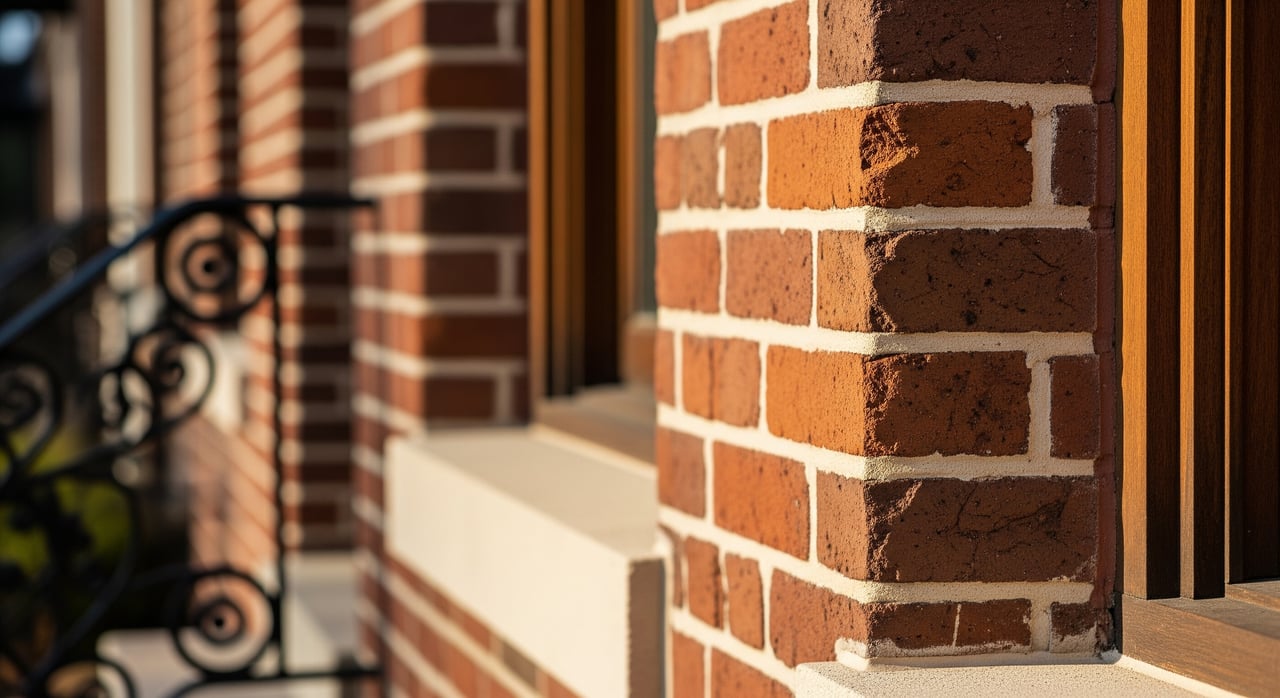
Ever notice flaking brick or crumbly mortar on your Church Hill rowhouse and wonder if repointing will fix it? You are not alone. The right mortar can protect your home; the wrong mix can crack your bricks and trigger costly repairs or run afoul of local rules. In this guide, you’ll learn the biggest repointing mistakes to avoid, how Church Hill’s historic-district approvals work, and how to hire the right pro. Let’s dive in.
What repointing is
Repointing is the careful removal of deteriorated mortar and the installation of new mortar in those joints. Done right, it blocks water, supports the wall, and maintains the historic look. Mortar is designed to be the sacrificial layer that fails before the brick does, which is why matching the original material is so important. For a deep overview, see the National Park Service’s Preservation Brief on repointing historic masonry. NPS Preservation Brief 2
Why mortar mix matters
Many Church Hill homes feature 19th-century brick paired with lime-rich, softer mortars. Modern, cement-heavy mixes are harder and less breathable than historic brick, which can trap moisture and cause spalling. The NPS recommends matching the original mortar’s composition, strength, porosity, and joint profile for long-term performance. NPS Masonry Guidelines
Richmond climate considerations
Richmond’s humid summers and periodic freeze–thaw cycles increase moisture stress in masonry. Your mortar must allow vapor to escape or you risk winter damage and flaking brick. Timing matters too: installation and curing in very hot, very cold, or soaking-wet conditions can lead to failures. Review local climate patterns as you plan your schedule. Richmond climate overview
Church Hill rules and approvals
Church Hill includes City of Richmond Old & Historic Districts, and exterior changes are reviewed by the Commission of Architectural Review (CAR). You may need a Certificate of Appropriateness or administrative approval if the work changes the look of joints, color, or profile. Contact CAR early for guidance and to confirm submittal requirements. Richmond CAR process
Which properties are covered
Parts of Church Hill, including the St. John’s Church Historic District and Church Hill North, appear on state and national registers and within city historic districts. Whether your home needs formal review depends on its designation and your scope of work. Start by confirming your address against local district maps and records. St. John’s Church Historic District listing
City vs. county
Church Hill proper lies within the City of Richmond; Henrico County has separate permitting processes. Before you schedule work, confirm which jurisdiction your property is in so you follow the right rules.
Common mistakes to avoid
1) Using a cement-heavy mix on old brick
- Problem: Hard, low-permeability mortar traps moisture and can crack or spall historic brick.
- Fix: Match the original mortar’s properties. Lime-rich blends are often appropriate for 19th-century brick; verify with analysis and a mock-up. NPS Masonry Guidelines
2) Over-raking joints or using aggressive power tools
- Problem: Deep grinding or careless removal chips brick faces and removes too much backing.
- Fix: Hand-rake to a conservative depth and protect arrises. Use test areas first and inspect before scaling up. GSA repointing guidance
3) Failing to match color, sand, and joint profile
- Problem: Mismatched joints look patchy and may signal the wrong mix or sand.
- Fix: Create test panels, tune sand color and gradation, and approve the joint profile before full production.
4) Repointing the entire wall without need
- Problem: Removing sound mortar increases risk and cost with no benefit.
- Fix: Target only deteriorated joints and plan for cyclical maintenance.
5) Working in the wrong weather without curing control
- Problem: Very hot, sunny, freezing, or rainy conditions cause curing failures and shrinkage cracks.
- Fix: Follow best-practice temperature and humidity guidance, often 40 to 80°F; protect work from rapid drying or freezing. GSA repointing guidance
6) Hiring the cheapest, least qualified contractor
- Problem: Inexperienced crews may use the wrong materials and tooling.
- Fix: Verify historic masonry experience, references, licensure, insurance, and willingness to do a mock-up. Questions to ask a mason
Do it right: a simple plan
- Document the wall. Photograph cracks, open joints, prior patches, staining, and loose bricks.
- Match the mortar. Request a visual match or lab analysis for important facades.
- Approve a mock-up. Inspect color, profile, and texture after curing before authorizing full work. GSA repointing guidance
- Schedule around weather. Build in time for protection and curing.
- Close out cleanly. Ensure joints are tooled to match, surfaces are cleaned without harsh methods, and waste is removed.
Hire the right pro
Ask pointed questions and get it in writing:
- Do you have Church Hill historic-brick experience and local references?
- How will you analyze and match composition, sand, color, and joint profile; will you provide a mock-up?
- What mix will you use, and why is it appropriate for this brick?
- Are you licensed with Virginia DPOR for this contract size, and do you carry insurance? Share license numbers and certificates. Verify with DPOR
- Who will handle CAR communication and any permits?
- What are the schedule, payment terms, warranty, and cleanup plan? Avoid large upfront payments.
Red flags to avoid
- No references or license proof
- Refusal to do a mock-up
- A one-size-fits-all cement mix for historic brick
- Whole-façade repointing without diagnostics
- Demands for very large deposits Read more common contractor red flags here. Home improvement red flags
What it costs
Costs vary with access and height, square footage of joints, mortar analysis, brick replacement, scaffolding, local labor rates, mock-up requirements, and any CAR application. The cheapest bid can be costly long term if it damages brick. Prioritize correct materials and skilled workmanship to protect your investment.
Local resources
- Neighborhood context and preservation culture: Church Hill Association
- Historic district background: St. John’s Church Historic District
- City review and approvals: Commission of Architectural Review
Next steps
If you own or plan to sell a historic Church Hill home, proper repointing protects value and keeps you in compliance. Start with documentation, speak with CAR, and vet a historic-masonry pro who will mock up the work and match your original mortar. If you want introductions to vetted local masons or guidance as part of preparing your home for market, reach out to Michela Worthington for neighborhood-specific advice.
FAQs
Do I need approval to repoint a Church Hill façade?
- If your property is within a City of Richmond Old & Historic District and the work changes the visible joints, color, or profile, CAR review or administrative approval may be required; contact CAR early to confirm.
Is Portland cement ever OK for Church Hill brick?
- It can be appropriate when the original mortar included cement or when bricks are modern; for softer historic brick, a lime-rich, more permeable mortar is usually safer based on analysis and a mock-up.
How long should quality repointing last?
- When you match the original mortar and follow best practices, repointing can last for decades; exposure, materials, and workmanship determine the exact lifespan.
Can I DIY a small repointing job?
- Small, low-visibility patches are possible for skilled DIYers, but matching historic mortar and avoiding brick damage are challenging; for large or visible work, hire a pro with historic-masonry experience and require a mock-up.